
Surface finishing is no longer a labor intensive process and is now a highly precise process. In the industrial world of the present, the quality of coatings is directly linked to durability, corrosion resistance, and perception. Many facilities use paint robots to improve control and maintain consistency as global standards get more strict and customers demand flawless quality finishes.
Modern paint robots provide programmable accuracy and controlled motion to applications that previously relied on the technique of the operator. By automatizing spray paths, speeds, and angles of application, manufacturers eliminate many of the naiveties that create uneven film building or excessive material use. The result is a predictable coating process that supports better First Time Quality and reduced the need for rework.
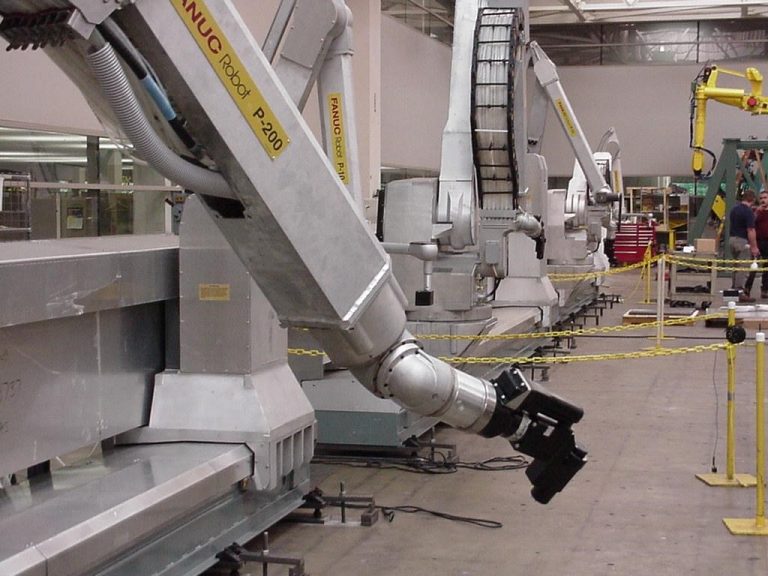
Image credit: automatedsolutions.com.au
Consistency and efficiency are essential to measurable results
Manual painting typically introduces variations in coverage and thickness due to human fatigue or tiny differences in technique. Paint robots eliminate this variability through the use of the exact motion patterns throughout each production cycle. This allows for a uniform surface finish on all parts as well as optimized distribution of the materials.
The efficiency of transfer in modern robotic paint systems is also increased. By ensuring a precise distance and orientation between applicator as well as component, there is less overspray and the coating material gets to the desired surface. Lower material waste directly impacts costs, while reducing emission of volatile organic compounds supports environmental compliance initiatives.
Integrated fluid handling within paint robotics ensures accurate mixing ratios for multi-component coatings. This eliminates any inconsistentities that could compromise the integrity of the finished. The combination of steady flow control and variable parameters allows manufacturers to fine tune atomisation settings and spray patterns in real-time without interrupting production.
Safety and productivity
A significant advantage of adopting a paint robot lies in increased uptime. Robotic paint cells operate in a continuous manner and are not interrupted unlike manual processes. Once they are programmed, they can ensure continuous throughput with no interruptions or constant supervisory supervision.
Security considerations are essential when dealing with solvent-based coatings and two-component paints. Atomised paint can create hazardous environments, especially when dealing with flammable or reacting materials. Modern paint robots are developed to be safe even in the most demanding working environments. They can reduce the exposure of personnel to hazardous chemicals and boost safety in workplaces.
Conveyor track technology increases productivity even more by allowing robot paint application as components continue to move. This increases the effectiveness of the working area and helps keep production lines running efficiently.
Australian Automation Expertise Supporting Industry
Access to automation partners that have expertise is crucial for businesses that want to modernise finishing operations. Automated Solutions in Australia has a solid reputation for providing the most advanced robotic integration solutions. As certified FANUC robotic integrators, with deep expertise in automation engineering the team supports businesses to implement custom robotic paint solutions that meet their business goals.
Automated Solutions helps manufacturers evaluate their processes and develop robotized paint cells by combining experience from industry with technical expertise. Facilities can gain a deeper understanding of the performance improvement process through co-operative planning, simulation and system integration.
Paint robotics encompasses more than simply automation. It is about improving quality, safety and effectiveness. A well-engineered system for painting transforms finishing on surfaces into a precise efficient, repeatable, and economical process. With the assistance of knowledgeable professionals in automation, manufacturers are able to increase their competitiveness and establish themselves for longevity in a demanding market.